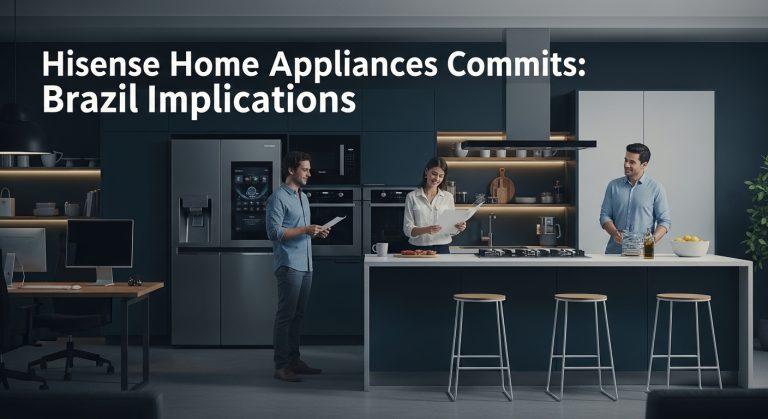

Electronics Home Appliances Brazil: Market Trends and Choices
Updated: April 9, 2026
In Brazil, the electronics Home Appliances Brazil segment is at the heart of households upgrading to smarter, more energy-efficient living. As families add connected devices, manufacturers and retailers face shifting demand, supply constraints, and a push toward durable, value-led purchases. This analysis surveys the current landscape and presents practical takeaways for families, retailers, and manufacturers navigating a year of transition along the path to a more connected home.
Market snapshot: demand patterns and product mix
Brazilian consumers continue to prioritize energy efficiency and reliability when selecting large appliances such as refrigerators, washing machines, and air conditioners. Mid-market brands compete on capacity, warranty, and service networks, while entry-level models gain traction in urban centers where financing options are more accessible. Smaller connected devices — smart plugs, thermostats, and integrated sensors — are expanding the ecosystem but still represent a smaller share of purchases compared to core appliances. The Brazilian market also shows a growing appetite for after-sales support, spare-parts availability, and brands with local service networks.
Channels and consumer behavior
Online channels are reshaping how households compare features, read reviews, and place orders, even for durable goods that historically relied on in-store demonstrations. Financing offers for appliances, including installment plans and credit cards, help households manage upfront costs, though overall inflation and interest rates influence purchase timing. Urban consumers tend to replace aging devices more quickly when utility bills reflect real-time consumption, while rural areas influence adoption through refurbished or smaller energy-efficient models.
Regulation and energy efficiency
Brazil’s energy labeling programs and Inmetro certifications influence shopper choices and push manufacturers toward higher efficiency. The Procel seal and related incentives encourage longer product lifespans and lower operating costs. Retailers increasingly emphasize energy savings and warranty coverage as value propositions, while policymakers debate electronics recycling and e-waste programs that can affect end-of-life costs for households and brands.
Innovation and local adaptation
Global manufacturers adapt their product lines to Brazilian climate and housing styles, such as frost-free refrigerators for diverse regional markets, or heat-pump capable air conditioners for energy use. Local partnerships with service providers can reduce downtime and improve brand trust. Startups and established players explore smart-home ecosystems that integrate appliances with voice assistants and mobile platforms, but consumer awareness and data privacy concerns remain important considerations.
Actionable Takeaways
- For households: prioritize appliances with strong energy efficiency ratings and reliable service coverage; calculate total cost of ownership over the product life cycle.
- For retailers: highlight energy savings, warranty terms, and easy financing options; expand online and in-store demonstrations for smart-home bundles.
- For manufacturers: tailor product lines to Brazilian climate and housing styles, ensure local service networks, and optimize for common plug standards and voltage.
- For policymakers and industry groups: maintain clear energy labeling and recycling programs to support sustainable adoption of electronics Home Appliances Brazil.
- For installers and integrators: offer certified smart-home setup and security practices to build consumer trust in connected appliances.
Source Context
From an editorial perspective, separate confirmed facts from early speculation and revisit assumptions as new verified information appears.
Track official statements, compare independent outlets, and focus on what is confirmed versus what remains under investigation.
For practical decisions, evaluate near-term risk, likely scenarios, and timing before reacting to fast-moving headlines.
Use source quality checks: publication reputation, named attribution, publication time, and consistency across multiple reports.
Cross-check key numbers, proper names, and dates before drawing conclusions; early reporting can shift as agencies, teams, or companies release fuller context.
When claims rely on anonymous sourcing, treat them as provisional signals and wait for corroboration from official records or multiple independent outlets.
Policy, legal, and market implications often unfold in phases; a disciplined timeline view helps avoid overreacting to one headline or social snippet.
Local audience impact should be mapped by sector, region, and household effect so readers can connect macro developments to concrete daily decisions.
Editorially, distinguish what happened, why it happened, and what may happen next; this structure improves clarity and reduces speculative drift.
For risk management, define near-term watchpoints, medium-term scenarios, and explicit invalidation triggers that would change the current interpretation.