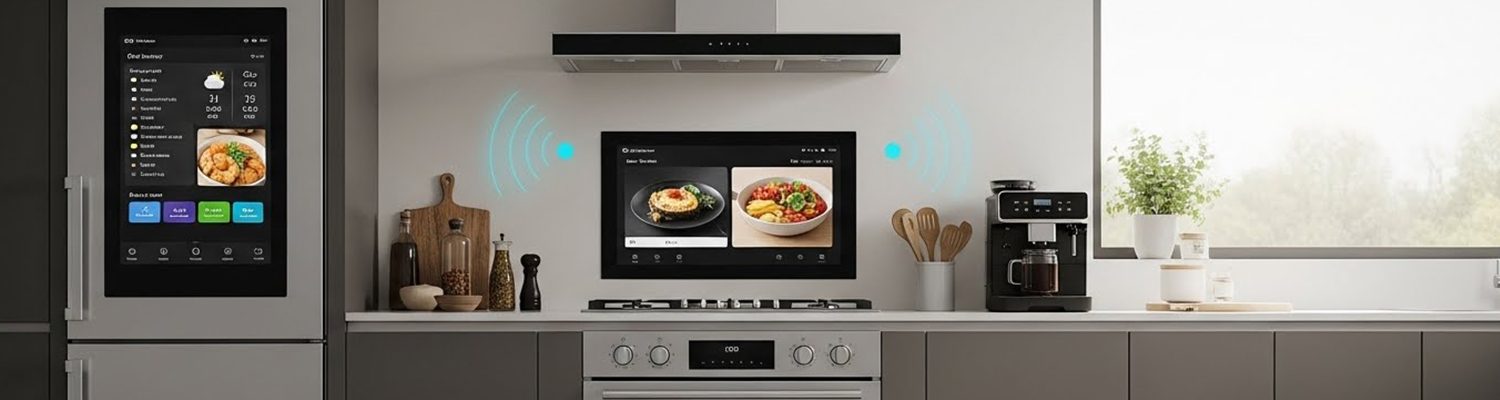

Modern Brazilian kitchen with smart, energy-efficient appliances
Updated: April 9, 2026
In the evolving landscape of Brazilian consumer technology and household goods, lg’s Home Appliances Brazil is pursuing a strategic expansion that blends manufacturing ambition with market ambitions. The project is reported to involve a compact 770 m² facility backed by a roughly R$1.5 billion investment, with projections of about 1,000 new jobs and the production of 500 refrigerators per year. If realized, the initiative would target a Brazilian market reported in the tens of billions of reais annually. This analysis examines how such a venture could reshape supply chains, consumer prices, and competitive dynamics in a market where affordability, energy efficiency, and product reliability weigh heavily on household decisions.
Market Context and Growth Prospects
Brazil’s home appliances sector sits at the intersection of resilient consumer demand and macroeconomic volatility. The proposed LG facility signals a push to localize more of the value chain, reducing exposure to currency swings and import costs. Analysts often frame such moves as a response to two pressures: the need to meet rising domestic consumption, and the desire to insulate a brand’s after-sales network from logistical disruption. If the factory reaches full scale, LG could leverage shorter lead times and localized service networks to differentiate on warranty terms, spare parts availability, and after-sales support. The broader implication is a potential acceleration of localized manufacturing across the segment, prompting rivals to reassess their own Brazil-based footprints and supplier partnerships.
Beyond raw production figures, the scale of the opportunity hinges on consumer confidence, credit access, and energy-price trajectories. A manufacturing footprint tied to refrigerators and other essential appliances positions LG to align product launches with seasonal demand and promotional cycles. In turn, retailers may experience more stable inventory turnover and more predictable pricing bands, assuming the local supply chain remains robust and there is clarity on import policies and taxation that influence consumer price points.
Manufacturing Footprint and Local Supply Chains
The anticipated 770 m² footprint, while compact by industrial standards, raises questions about capacity utilization and the breadth of products that could be produced alongside refrigerators. A meaningful upside would involve a tiered production plan: core refrigerator lines complemented by related white goods or ancillary components sourced locally. Local content, supplier development, and workforce training would be critical to sustaining quality and reducing defect rates as output scales. Energy costs and grid reliability also come into play, given the country’s ongoing reforms in power distribution and incentives for energy-efficient appliances. A localized plant with strong procurement and quality controls could, in theory, shorten the cycle time from design to shelf, enabling rapid iteration based on consumer feedback and warranty performance data.
Furthermore, the integration of this facility into LG’s global supply network would depend on cross-border logistics, component standardization, and the ability to leverage Brazil as a regional hub for neighboring markets. The long-term viability of such a model rests on a stable policy environment, favorable tax regimes for manufacturing investments, and a clear, enforceable plan for workforce development that aligns with the skills required for modern refrigeration and home-appliance assembly.
Consumer Impact and Affordability
For Brazilian households, the prospect of more locally produced refrigerators can translate into improved after-sales support, potentially lower prices, and faster access to replacement parts. Energy efficiency remains a critical lens through which consumers evaluate appliance purchases; LG’s global emphasis on energy-saving features could resonate in a market where electricity costs are a practical concern for families. If the plant helps bring new models with better energy performance to the market, households could see long-run savings on operating costs even if upfront prices are tempered by import costs or local taxation. Retailers stand to gain from improved product availability and more predictable service windows, helping to reduce downtime for warranty work and increasing customer satisfaction—factors that increasingly influence store foot traffic and loyalty programs.
However, price parity with competing brands will depend on currency dynamics, import substitution success, and how aggressively LG leverages its warranty ecosystem. The practical impact for consumers will hinge on three factors: the breadth of product lines introduced locally, the pace of product introductions that align with consumer cycles, and the perceived reliability of LG-branded appliances relative to regional peers. In short, the consumer experience could improve if the local plant translates into faster service and more affordable, energy-efficient options—but this hinges on execution across procurement, logistics, and aftermarket channels.
Policy and Competitive Landscape
The competitive dynamics of Brazil’s home-appliance market are shaped not only by consumer demand but also by regulatory and policy elements. Local manufacturing investments often ride on a mix of tax incentives, import duties, and content requirements designed to build domestic capabilities. For LG, a successful integration of a new plant would require navigating these policy levers while differentiating through product reliability, warranty terms, and ecosystem compatibility with smart home platforms. Competitors—both local manufacturers and international brands—will respond with price adjustments, feature differentiation, and expansions of distribution networks. The outcome could be a more competitive market where brands compete not just on price but on total cost of ownership, energy efficiency, and reliability across the appliance lifecycle.
Meanwhile, external factors such as currency volatility, interest rates, and macroeconomic performance will increasingly influence investment decisions. For consumers, the net effect could be a more dynamic market with faster rollouts of innovative features, provided policy certainty and stable supply chains underpin the local manufacturing push.
Actionable Takeaways
- Track LG’s announcements on local production milestones and modelラインups to gauge when new, energy-efficient refrigerators may reach showrooms.
- Compare total cost of ownership for LG appliances versus rivals, considering energy consumption, warranty terms, and spare parts availability in Brazil.
- Monitor policy developments related to local content incentives and import duties, as these can alter pricing and model availability.
- Prepare for potential promotions aligned with factory ramp-up cycles, which can offer opportunities for more favorable financing or rebates.
- Assess retailer networks and after-sales service quality in your region to maximize appliance uptime and support experiences.