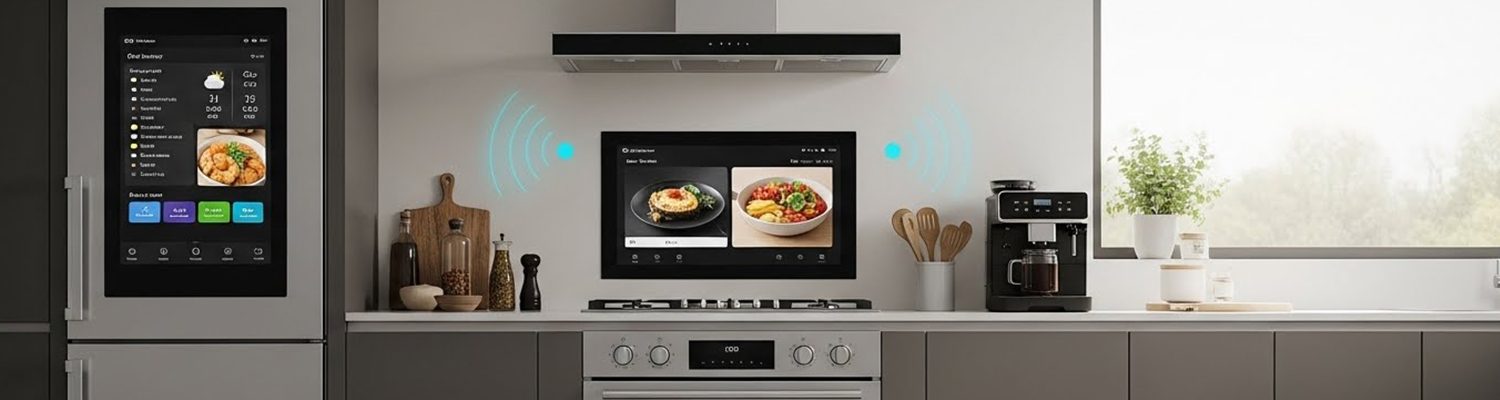

Brazilian living room featuring smart appliances and security-themed icons.
Updated: April 9, 2026
This report captures Home Appliances Brazil by examining how shifting demand, energy considerations, and new factories are reshaping how Brazilian households equip their homes.
Market Dynamics and Consumer Behavior
In Brazil’s appliance segment, demand is increasingly guided by a mixture of price sensitivity, credit access, and energy costs. As households juggle budgets in a high-inflation environment, the appeal of energy-efficient models becomes not just a savings claim but a practical budget decision. Consumers compare upfront price with long-term operating costs, and retailers respond with tiered offerings ranging from basic refrigerators to connected, smart appliances. This dynamic creates a two-tier market: entry models that address essential needs and premium devices that promise ongoing savings through features like inverter compressors, adaptive defrost, or load-aware operation. The result is a market where brands must translate engineering advantages into tangible, everyday value—reliability, service networks, and realistic warranty terms become a differentiator as much as price. In parallel, e-commerce and financing options are broadening access, while import cycles remain sensitive to currency movements and logistics disruptions. The consequence for the sector is more frequent product cycles, with manufacturers balancing speed to market against the risk of overstock and obsolescence in a volatile economy.
Policy, Energy Efficiency, and Grid Impacts
Brazil’s policy environment increasingly prizes energy efficiency, with labeling schemes and efficiency standards shaping consumer expectations and product design. Appliances that minimize peak demand and exploit fresh refrigerant technology are favored not only by households seeking lower bills but by distributors hoping to reduce strain on the grid during dry-season peaks. This alignment between policy and consumer preference drives manufacturers to optimize compressors, insulation, and electronics for lower standby power. It also influences the allocation of capital—investments favor plants and supply chains that can deliver high-efficiency models at scale. Yet policy remains a balancing act: incentives must be accessible to a broad segment of the market, while manufacturers must maintain a robust service and spare-parts ecosystem across remote regions to ensure long-term performance. The net effect is a more predictable demand curve for energy-rated products, even as macroeconomic headwinds shape the pace of adoption and the breadth of model availability.
Manufacturing Footprint: Domestic Production and Jobs
Industry observers point to concrete examples of local investment, such as LG’s recent Brazil factory expansion, which signals a strategic push to domesticate more of the value chain. Reports describe a R$1.5 billion investment tied to a facility of substantial scale intended to generate thousands of jobs and to produce hundreds of refrigerators annually, targeting a market that runs into billions of reais. Beyond the headline figures, the implication for Brazil’s appliance sector is the strengthening of supplier ecosystems, increased after-sales capacity, and the potential for export-driven growth as regional distribution networks mature. However, this path carries risks: capital-intensive projects require stable demand, skilled labor, access to materials, and efficient logistics to sustain production lines. The region’s manufacturing trajectory thus sits at a crossroads between globalization pressures and the push for local resilience, with factory decisions shaping regional competitiveness for years to come.
Technology Trends in the Home
On the consumer side, connected devices, smart energy-management features, and durable design are becoming table stakes in mid- to high-end segments. With homes adopting broader Internet of Things ecosystems, appliances increasingly speak a common language for remote monitoring, maintenance, and energy optimization. Retail and service models are shifting accordingly: users expect clearer energy usage data, proactive diagnostics, and easier access to replacement parts. For Brazil, where grid reliability and urban density vary by region, manufacturers are tailoring products for resilience as well as efficiency—think compressors rated for variable electricity inputs, robust thermal insulation, and software updates that extend a device’s useful life. This trend also implies a longer tail for consumer support and education: the most successful players will pair hardware with accessible service networks, local language interfaces, and transparent warranty and recycling commitments.
Actionable Takeaways
- Evaluate energy labels and real-world consumption data when choosing major appliances to minimize long-term operating costs.
- Prioritize models with strong service networks and easy access to spare parts in your region to improve total cost of ownership.
- Consider domestic production lines and local warranties when weighing purchase decisions, as they can reduce downtime and support local economies.
- Monitor financing options and promotions that align with seasonal demand, helping to spread upfront costs without compromising long-term savings.
- Plan appliance upgrades around peak electricity periods or utility incentives to maximize energy savings and grid compatibility.