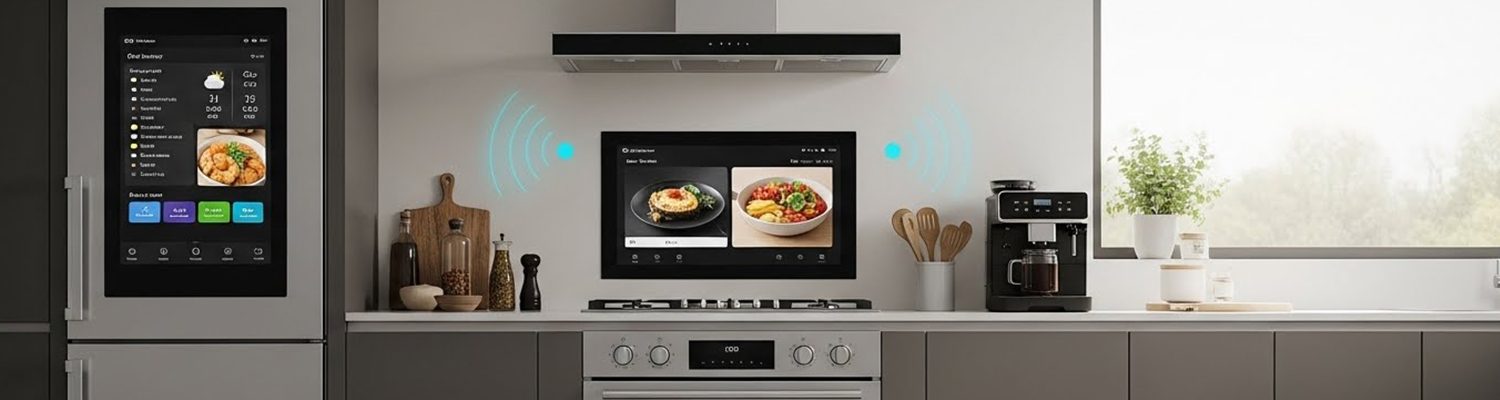

Smart home appliances in a modern Brazilian living room with energy efficiency highlights.
Updated: April 9, 2026
In Brazil, the electronics Home Appliances Brazil landscape is shifting under the pressure of urban growth, rising disposable income for many households, and a rapid uptake of online shopping. This deep-dive analyzes how consumer preferences, pricing strategies, and policy signals intersect to shape the smart-home segment, and what families should expect when selecting refrigerators, washing machines, air conditioners, and connected devices that promise efficiency and convenience.
Market context and consumer behavior
Brazil’s market for home appliances remains highly regional. Metropolises like Sao Paulo, Rio de Janeiro, and Belo Horizonte concentrate demand for higher-efficiency models and connected features, while many inland regions continue to balance affordability with reliability. The central dynamic is not only what devices people buy, but how they pay for them. Access to credit, parcelamento options, and promotional financing influence choice more than sticker price alone, because a larger share of households evaluates total ownership costs—energy usage, maintenance, and service availability—over the product’s life. In this context, the premium on energy efficiency, long-term warranties, and robust after-sales support increasingly translates into purchase probability.
Household decisions are also shaped by energy costs and voltage realities. Brazil’s diverse electrical infrastructure—where appliances must be compatible with varying supply standards—adds a practical layer to selection. Consumers now expect not just smart features, but compatibility and resilience that survive regional outages or fluctuations. As a result, models with clear energy labels, long-term performance data, and transparent repair options gain traction, even when upfront costs are modestly higher. The net effect is a market that rewards devices with predictable total cost of ownership and dependable service networks, more than the flash of a single feature.
The online-to-offline balance is another driver. E-commerce accelerates access to a wider range of brands and models, yet the reliability of delivery windows, installation, and service remains a critical differentiator. Retailers that combine online selection with local calibration and in-home installation tend to outperform those focused solely on price. In this dynamic, consumer education—clear comparisons of energy consumption, potential savings, and warranty terms—becomes a strategic asset for brands aiming to build trust in a market where reputations are earned through performance over years.
Supply chain and policy influences
Global supply chain volatility and currency movements reverberate through the Brazilian appliance market. Import reliance for popular models means price and lead times can shift with exchange rates and container availability. Local assembly and regional distribution networks help soften these shocks, but require ongoing investment in skills, tooling, and a dependable parts ecosystem. Public policy, including tariffs, incentives for domestic manufacturing, and energy efficiency standards, shapes the competitive landscape in meaningful ways. When policies favor local assembly and upgraded labeling programs, manufacturers may prioritize easier export channels or dedicated distribution lines within Brazil, reducing time-to-market while supporting service infrastructure. Conversely, tighter import controls or higher duties can push buyers toward domestically produced lines, reinforcing the value of a robust local supply chain.
Energy-efficiency mandates and labeling regimes influence both consumer choice and product design. Appliances that clearly demonstrate long-term savings over their life cycle become more appealing when utility costs are an important budget consideration for households. These policy signals also encourage manufacturers to optimize electronics architecture for reliability and maintainability, rather than relying solely on cutting-edge features that may complicate repairs or degrade over time. In short, policy and supply chain dynamics interact to define what is available, how quickly it arrives, and how confidently Brazilian households can plan for future energy use.
Technology adoption and household implications
Smart features—remote monitoring, automated settings, and data-driven diagnostics—are increasingly common across mainstream ranges, not just premium lines. For Brazilian households, the practical value lies in predictable performance, proactive fault alerts, and the ability to coordinate multiple devices into cohesive routines—for example, an appliance sequence that optimizes energy use during peak tariff periods. Yet adoption is nuanced. Trust in data privacy, concerns about software updates, and the durability of connectivity in areas with spotty internet access shape uptake. Manufacturers that design for offline functionality, straightforward repairability, and clear, local language interfaces tend to win broader acceptance.
At the household level, the promise of connected appliances is strongest when it translates into tangible savings and reduced energy waste. This often means solutions that provide real-time energy dashboards, simple maintenance reminders, and reliable customer support. For families managing tight budgets, even modest gains—like better cycle optimization, faster defrost, or smarter heat exchange in air conditioning—can accumulate into noticeable reductions in monthly bills. As the ecosystem matures, interoperability across brands and platforms grows, enabling more integrated smart homes that reflect Brazilian daily life and typical energy patterns.
Actionable Takeaways
- Manufacturers should emphasize long-term energy savings, transparent warranties, and accessible service networks to build trust in a price-competitive market.
- Retailers should align marketing with practical total-cost-of-ownership narratives, offering financing options and in-home installation to reduce buyer hesitation.
- Policymakers can support consumer outcomes by fostering domestic production while maintaining competition and strengthening appliance repair infrastructure.
- Consumers benefit from comparing energy labels, verifying voltage compatibility, and prioritizing products with reliable after-sales support and privacy protections for connected devices.
- Industry players should invest in clear, localized user interfaces and offline-capable features to ensure reliable performance across Brazil’s diverse regions.
Source Context
For broader industry context and related perspectives, see these sources:
LG Electronics accelerates growth in key strategic markets – ZAWYA
Supporters of Brazil’s Bolsonaro rally across Brazil against Lula – Pittsburgh Post-Gazette
The Derrick – Supporters of Brazil’s Bolsonaro rally across Brazil against Lula
These sources provide background on market dynamics, political risk considerations, and regional perspectives that influence the home appliances sector in Brazil.