Decoding Dolby Atmos: Why This Home Audio Feature is a Game-Changer
In the rapidly evolving world of home entertainment, the quest for the ultimate audio experience has led to the rise of numerous technologies, but few have made as significant an impact as Dolby Atmos. This revolutionary sound format promises an immersive audio experience that transcends traditional surround sound, offering a new dimension to home audio systems. But what exactly is Dolby Atmos, and why is it considered a game-changer in the realm of home audio? Let’s dive in.
Understanding Dolby Atmos
Introduced by Dolby Laboratories in 2012, Dolby Atmos is an audio technology that expands on traditional surround sound systems by adding height channels. This enables sound designers to place audio elements in a three-dimensional space, creating a more realistic and immersive sound environment. Unlike conventional systems, which are typically limited to channels, Dolby Atmos allows for up to 128 audio tracks and the use of audio objects that can be independently placed and moved anywhere in a three-dimensional space.
How Dolby Atmos Works
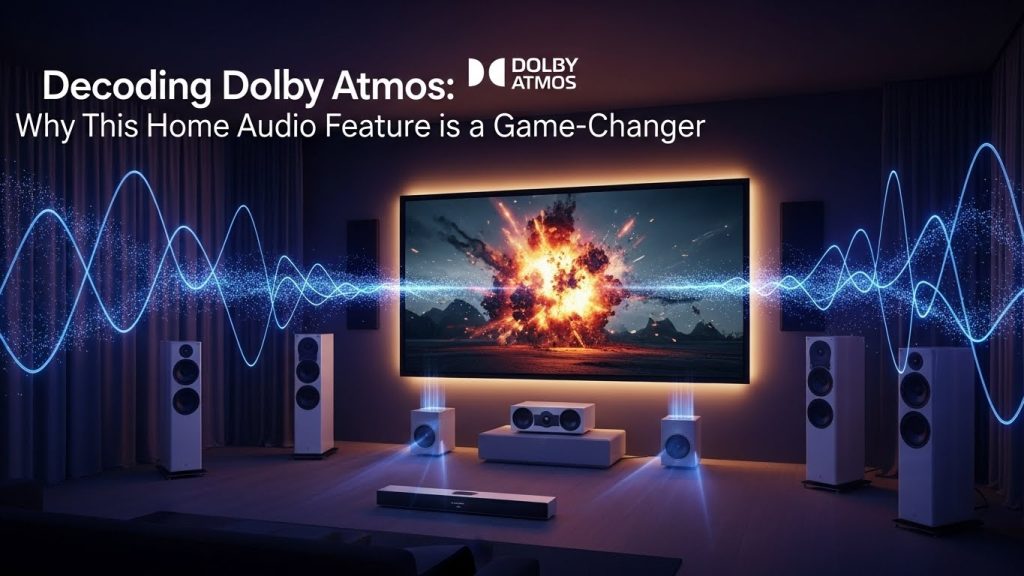
The magic of Dolby Atmos lies in its ability to treat sounds as objects. Instead of assigning sounds to specific speakers, Atmos allows sound engineers to decide where each sound should originate in a 3D space. This is achieved through a combination of overhead speakers and soundbars that can reflect sound off the ceiling, creating the illusion of sounds coming from above the listener. As a result, the audience feels enveloped by the audio, experiencing a more natural and lifelike soundscape.

The Benefits of Dolby Atmos in Home Audio
The incorporation of Dolby Atmos in home audio systems brings a multitude of benefits that enhance the overall listening experience:
- Immersive Experience: By simulating sound from all directions, Dolby Atmos creates a cinema-like experience in the comfort of your home, making you feel as if you’re part of the action.
- Precision Sound Placement: Sounds can be placed with pinpoint accuracy, allowing for more dynamic and realistic audio effects, such as a helicopter flying overhead or rainfall surrounding you.
- Adaptability: Dolby Atmos can be configured for various room sizes and speaker setups, making it a versatile option for different home environments.
- Compatibility: Many streaming services and Blu-ray discs now support Dolby Atmos, giving users access to a wide range of content that takes advantage of this technology.
Setting Up Dolby Atmos at Home
Integrating Dolby Atmos into your home audio setup can vary in complexity depending on your space and budget. Here are some key considerations:
Speakers and Soundbars: To fully experience Dolby Atmos, you’ll need compatible speakers or soundbars capable of delivering upward-firing sound. Many manufacturers offer soundbars with built-in Atmos support, which can be a more cost-effective solution for those with limited space.
AV Receivers: If you’re opting for a more traditional setup with separate speakers, a Dolby Atmos-enabled AV receiver is essential. These receivers are designed to handle the additional channels required for Atmos configurations.
Content Availability: Ensure that the content you’re consuming is Dolby Atmos-compatible. Streaming platforms like Netflix, Disney+, and Amazon Prime Video offer a growing library of Atmos-enabled movies and shows.
Comparing Dolby Atmos to Other Audio Technologies
While there are several audio technologies available, Dolby Atmos stands out due to its unique approach to sound placement and immersion. Here’s how it compares to some other popular formats:
- Dolby Digital: An older format that offers traditional surround sound with 5.1 or 7.1 channels. It lacks the height element and object-based audio of Atmos.
- DTS:X: A direct competitor to Dolby Atmos, DTS:X also offers object-based audio but with more flexibility in speaker placement. However, it’s less widely adopted in consumer electronics.
- Auro-3D: Similar to Atmos, Auro-3D adds a vertical audio layer, but it is less common in home setups and lacks the same level of content support.
Future of Dolby Atmos in Home Audio
The future of Dolby Atmos in home audio looks promising, with continuous advancements in hardware and content availability. As more consumers seek out immersive audio experiences, manufacturers are increasingly integrating Atmos into a broader range of devices, from TVs and soundbars to gaming consoles and smartphones.
Moreover, the rise of virtual reality and augmented reality technologies could further enhance the role of Dolby Atmos, offering even more immersive and interactive experiences. The potential for Atmos to be integrated into gaming and virtual environments is particularly exciting, as it could redefine how users interact with digital content.
Takeaways
Dolby Atmos represents a significant leap forward in home audio technology, offering an unparalleled level of immersion and realism. As content creators and manufacturers continue to embrace this technology, consumers can look forward to more engaging and lifelike audio experiences. Whether you’re watching your favorite movie, playing a video game, or listening to music, Dolby Atmos has the potential to transform how you experience sound in your home.
As the technology becomes more accessible and content continues to grow, investing in a Dolby Atmos-enabled system is an exciting opportunity for any home audio enthusiast looking to elevate their listening experience to new heights.
Practical Tips for Optimizing Dolby Atmos
To get the most out of your Dolby Atmos setup, here are some practical tips to optimize your home audio experience:
Room Acoustics: The acoustics of your room play a crucial role in how Dolby Atmos is perceived. Consider adding acoustic panels or rugs to minimize sound reflections and enhance clarity. Well-placed furniture can also help diffuse sound evenly across the room.
Speaker Placement: Proper speaker placement is key to achieving the full effect of Dolby Atmos. Overhead speakers should be positioned to cover the listening area, and upward-firing speakers should be angled correctly to reflect sound off the ceiling.
Calibration: Many AV receivers come with calibration tools that can help you fine-tune your system. Use these tools to adjust levels and distances for each speaker, ensuring balanced sound throughout the room.
Exploring Dolby Atmos Content
The growing library of Dolby Atmos content is one of the major factors driving its adoption among consumers. From blockbuster movies to music albums, here are some popular sources for experiencing Dolby Atmos:
Streaming Services: Platforms like Netflix and Disney+ offer a range of movies and series in Dolby Atmos. Look for the Atmos logo in the title’s description to ensure compatibility.
Music Streaming: Services like Tidal and Apple Music have started offering Dolby Atmos music tracks, providing an immersive listening experience that envelops you in sound.
Blu-ray Discs: Physical media enthusiasts can find numerous Blu-ray discs with Dolby Atmos tracks, offering uncompressed audio quality and a cinematic experience at home.
Challenges and Considerations
While Dolby Atmos offers many advantages, there are some challenges and considerations to keep in mind:
Cost: High-quality Dolby Atmos systems can be expensive, especially if you opt for a full-fledged speaker setup. However, soundbars with built-in Atmos support can be a more budget-friendly alternative.
Content Availability: Although the library of Dolby Atmos content is growing, not all movies and shows are available in this format. It’s important to check the audio specifications before deciding on a purchase or subscription.
Complexity: Setting up a Dolby Atmos system can be more complex than traditional audio systems, requiring careful consideration of speaker placement and room acoustics.
The Impact of Dolby Atmos on the Audio Industry
Dolby Atmos has had a profound impact on the audio industry, influencing both content creation and consumer expectations. Content creators now have the freedom to design soundscapes that were previously unimaginable, pushing the boundaries of audio storytelling. On the consumer side, Dolby Atmos has set a new standard for immersive sound, prompting manufacturers to innovate and incorporate this technology into a wide range of products.
The integration of Dolby Atmos in commercial cinemas has also raised audience expectations, leading to a demand for similar experiences at home. This shift has accelerated the adoption of advanced home audio technologies, transforming the way we consume media.
Final Thoughts
Dolby Atmos is more than just a technological advancement; it’s a paradigm shift in how we experience sound. By breaking free from the limitations of traditional surround sound, Atmos offers a level of realism and immersion that captivates and engages listeners. As technology continues to evolve, and as more content becomes available, Dolby Atmos will likely remain at the forefront of home audio innovation, shaping the future of how we experience sound in our everyday lives.
Whether you’re a cinephile, a gamer, or a music lover, embracing Dolby Atmos could redefine your audio experience, making every moment more vivid and memorable.
About the Author